Biefeld-Brown Effect: Difference between revisions
Created page with "<p class="fs-3 mb-1">TL;DR</p> Let’s breakdown the Biefeld-Brown effect and analyze what the different contributing factors are to producing, and most importantly, maximizing the effect for real world propulsion. There are many factors that together combine to create the Biefeld-Brown effect, the propulsive force observed in the direction from lower voltage to higher voltage plate in an asymmetric parallel plate capacitor. It is my hypothesis that the biggest factor..." |
No edit summary |
||
| Line 10: | Line 10: | ||
One interesting fact about the Equivalence Principle is that an object's inertial and gravitational masses are believed to be equal which results in objects of different masses falling at the same rate. This was demonstrated in the Apollo 15 Moon landing in 1971 where astronaut David Scott dropped a hammer and a feather at the same time. The reason feathers fall slower on Earth is due to wind resistance. On the Moon there is no atmosphere and therefore no wind resistance. | One interesting fact about the Equivalence Principle is that an object's inertial and gravitational masses are believed to be equal which results in objects of different masses falling at the same rate. This was demonstrated in the Apollo 15 Moon landing in 1971 where astronaut David Scott dropped a hammer and a feather at the same time. The reason feathers fall slower on Earth is due to wind resistance. On the Moon there is no atmosphere and therefore no wind resistance. | ||
[[File:Capacitor-schematic-bbe.png|class=img-fluid|link=https://backend.uapedia.wiki/images/0/02/Capacitor-schematic-bbe.png]] | |||
<h2>Propulsion Factors Observed by Thomas Townsend Brown</h2> | |||
*Capacitors charged to a high voltage move in the direction from negative to positive capacitor plate. | |||
*There is a positive correlation between the voltage difference between the capacitor plates and the strength of the effect, where the higher the voltage, the greater the effect. | |||
*There is a positive correlation between the dielectric strength (it’s ability to resist the flow of electricity through it) of the material between the electrodes and the strength of the effect, where the higher the dielectric strength, the greater the effect. | |||
*There is a positive correlation between the dielectric constant (the ability of the dielectric to store electrical energy) of the material between the electrodes and the strength of the effect, where the higher dielectric constant, the greater the effect. | |||
*There is a positive correlation between the area of the capacitor plates and the strength of the effect, where the greater the area of the capacitor, the greater the effect. | |||
*There is a positive correlation between the mass of the dielectric material and the strength of the effect, where the greater the mass, the greater the effect. | |||
*There is a negative correlation between the distance between the plates of the capacitor and the strength of the effect, where the effect increases linearly with the thinner the dielectric is. | |||
Revision as of 04:11, 2 December 2025
TL;DR
Let’s breakdown the Biefeld-Brown effect and analyze what the different contributing factors are to producing, and most importantly, maximizing the effect for real world propulsion.
There are many factors that together combine to create the Biefeld-Brown effect, the propulsive force observed in the direction from lower voltage to higher voltage plate in an asymmetric parallel plate capacitor. It is my hypothesis that the biggest factor behind the Biefeld-Brown effect is the production of spin alignment of unpaired protons in the dielectric and the metal capacitor plate electrodes.
Introduction
To put it simply, inertia is the force you feel pushing you into your seat when you are accelerating in a car and the same force you feel when slamming on the brakes. It is the force every object feels when it is accelerating or decelerating. Albert Einstein posited that a man standing in a rocket that was accelerating vertically at 9.8m/s2 would be unable to tell the difference between standing in that accelerating rocket and standing on the planet Earth whose gravitational acceleration rate is also 9.8m/s2. Formally this correlation is known as the Equivalence Principle.
One interesting fact about the Equivalence Principle is that an object's inertial and gravitational masses are believed to be equal which results in objects of different masses falling at the same rate. This was demonstrated in the Apollo 15 Moon landing in 1971 where astronaut David Scott dropped a hammer and a feather at the same time. The reason feathers fall slower on Earth is due to wind resistance. On the Moon there is no atmosphere and therefore no wind resistance.
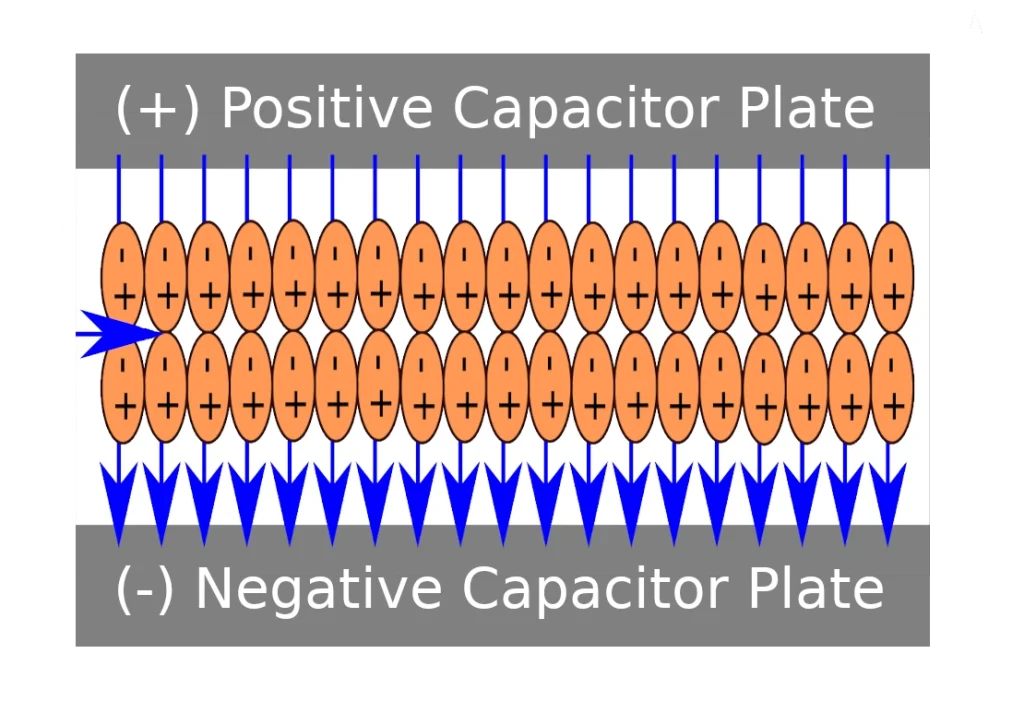
Propulsion Factors Observed by Thomas Townsend Brown
- Capacitors charged to a high voltage move in the direction from negative to positive capacitor plate.
- There is a positive correlation between the voltage difference between the capacitor plates and the strength of the effect, where the higher the voltage, the greater the effect.
- There is a positive correlation between the dielectric strength (it’s ability to resist the flow of electricity through it) of the material between the electrodes and the strength of the effect, where the higher the dielectric strength, the greater the effect.
- There is a positive correlation between the dielectric constant (the ability of the dielectric to store electrical energy) of the material between the electrodes and the strength of the effect, where the higher dielectric constant, the greater the effect.
- There is a positive correlation between the area of the capacitor plates and the strength of the effect, where the greater the area of the capacitor, the greater the effect.
- There is a positive correlation between the mass of the dielectric material and the strength of the effect, where the greater the mass, the greater the effect.
- There is a negative correlation between the distance between the plates of the capacitor and the strength of the effect, where the effect increases linearly with the thinner the dielectric is.

