Bob Lazar
TL;DR
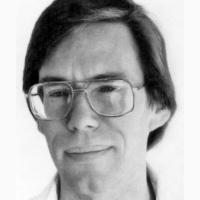
Introduction
Bob Lazar (Robert Scott Lazar, born 1959) is an American businessman and UFO conspiracy theorist best known for his 1989 claims that he worked on reverse-engineering extraterrestrial spacecraft at a secret facility called “S-4” near Area 51 in Nevada.:contentReference[oaicite:0]{index=0} He popularized the idea of a disc-shaped craft he called the “Sport Model” and asserted that its propulsion system was powered by a then-unknown substance he referred to as “Element 115.”:contentReference[oaicite:1]{index=1}
History
Early life and background
Lazar was born in Coral Gables, Florida, and later became known in the 1980s for his interest in high-performance vehicles, including a jet-powered car that attracted local media attention near Los Alamos, New Mexico.
He has claimed educational degrees in physics from the Massachusetts Institute of Technology (MIT) and in electronics from the California Institute of Technology (Caltech). However, journalists and researchers who contacted those institutions reported no records of him attending, and critics argue that public records of his earlier schooling conflict with the advanced academic background he describes.
Later, Lazar founded and operates United Nuclear Scientific Equipment & Supplies, a company that sells scientific materials, chemicals, and equipment to hobbyists and researchers.
Claims about S-4 and Area 51
In 1989, Lazar appeared in a series of interviews with Las Vegas television journalist George Knapp on KLAS-TV. Initially using a pseudonym and obscured face, he stated that:
- He had been employed at a facility called “S-4,” located near Papoose Lake south of the main Area 51 complex
- His work allegedly involved reverse-engineering one of nine disc-shaped craft stored at S-4
- These craft were, according to him, of extraterrestrial origin
Lazar said he was hired via the defense contractor EG&G and that his formal employer at S-4 was the United States Navy. EG&G and official Air Force sources have stated that they have no employment records for him, and his claims remain unverified.
The “Sport Model” Craft
Overview and Appearance
Among the alleged nine craft at S-4, Lazar described one particular disc that he nicknamed the “Sport Model.”
According to his account:
- The craft is a compact, disc-shaped vehicle with a central dome on top
- Its exterior is smooth and metallic, with an appearance he likened to polished or “liquid” metal
- The interior is designed for very small occupants, with low ceilings and a sparse, utilitarian layout
These details have become widely reproduced in models, illustrations, and 3D prints marketed as representations of Lazar’s Sport Model.
Alleged Propulsion System and Operation
Lazar claims that the Sport Model’s propulsion is based on the manipulation of gravity through a reactor fueled by Element 115.
In his description:
- A small reactor at the center of the craft uses a stable isotope of Element 115 as fuel
- The reactor generates a gravititional “A-wave” that can be focused by three gravity amplifiers mounted beneath the craft
- By bending or “warping” spacetime in front of the vehicle, the craft is said to move not by conventional thrust but by falling into a continuously distorted region of space
Lazar asserts that this system allows the Sport Model to:
- Hover silently
- Achieve rapid accelerations and extreme maneuvers
- Create visual distortions around the craft due to intense gravitational effects
These descriptions, while influential in UFO and speculative propulsion discussions, have not been demonstrated experimentally or accepted within mainstream physics.
Element 115
Lazar’s Description of Element 115
In his 1989 testimony, Lazar referred to a then-unknown substance he called “Element 115,” claiming it was the key fuel for the Sport Model’s gravity propulsion system.
According to Lazar:
- The material is a heavy element with atomic number 115
- He worked with a small quantity (he has sometimes said around half a pound) of a stable isotope of this element
- When bombarded in the reactor, it produces a unique gravity-like field used by the craft’s engines
He further suggested that this stable isotope does not occur naturally on Earth, and that it may originate from extraterrestrial technology or from a region of the universe where such isotopes are stable.
Scientific Discovery of Moscovium
Years after Lazar’s public claims, scientists synthesized a super-heavy element with atomic number 115, now officially named moscovium (chemical symbol Mc).
Key points about moscovium include:
- It was first reported by a Russian-American collaboration in the early 2000s and later confirmed by further experiments
- The isotopes produced so far are extremely unstable, with half-lives on the order of milliseconds
- No stable isotopes of moscovium are known; its behavior is consistent with predictions for super-heavy elements in this region of the periodic table
Lazar and some supporters argue that laboratory-made isotopes may differ from the stable isotope he describes, while critics note that there is no empirical evidence for such a stable form or for the gravity-manipulation properties he attributes to it.
Debate over Stability and Feasibility
Scientists generally regard Lazar’s description of Element 115 as incompatible with current nuclear physics, because:
- All observed moscovium isotopes decay far too quickly to be handled, processed, or used in macroscopic reactors
- Theoretical “islands of stability” for super-heavy elements remain speculative and do not yet support the existence of a long-lived isotope with the extraordinary properties Lazar claims
- No independent experiment has confirmed gravity-control effects from any element or isotope
As a result, Lazar’s Element 115 remains a core point of contention between believers and skeptics.
Reception and Controversy
Questions about Education and Credentials
Investigations by journalists, researchers, and skeptics have raised significant doubts about Lazar’s claimed academic and professional background.
Common points raised by critics include:
- Universities he cites (MIT and Caltech) have no records of him as a student
- High school and junior-college records indicate a more modest academic history than he claims
- Institutions and contractors he mentions as former employers have stated they have no employment files on him in the roles he describes
Lazar has responded that his records were deliberately erased by authorities to discredit him, but critics argue this explanation is implausible given the number and type of institutions involved.
Legal Issues and Public Image
Lazar has been convicted in unrelated criminal cases, including a 1990 conviction related to involvement in a prostitution ring and a 2006 conviction for selling illegal chemicals through his business.
These legal issues, together with the lack of verifiable evidence for his S-4 story, have led many commentators to view him as an unreliable witness, while some supporters consider them irrelevant to the truth or falsity of his technical claims.
Influence on UFO Lore
Despite controversy, Bob Lazar’s narrative has had a lasting impact on UFO culture and public perceptions of Area 51:
- He popularized the idea of secret underground facilities at Papoose Lake (S-4) devoted to alien technology
- The terms “Sport Model” and “Element 115” have become embedded in UFO and alternative-propulsion discussions
- His story has been featured in books, documentaries, podcasts, and online debates, inspiring both imitators and dedicated critics
Within mainstream science and journalism, Lazar’s claims are widely regarded as unsubstantiated, but in UFO communities he remains one of the most influential and controversial figures associated with alleged government knowledge of extraterrestrial craft.

